
A well-designed new conservatory can change the way you use your home. It brings you closer to the garden, fills your living space with natural light and gives the whole family more room to spread out. Choosing the right style is what makes it feel like it was always meant to be there.
The good news is that your home itself often points you in the right direction. Period properties tend to suit a Victorian conservatory. Edwardian and gable styles make the most of your floor space, while a lean-to is the best choice where space is limited. In this guide, we’ll walk you through the main styles of conservatories, your roof and frame options and how to find the right fit for your budget.
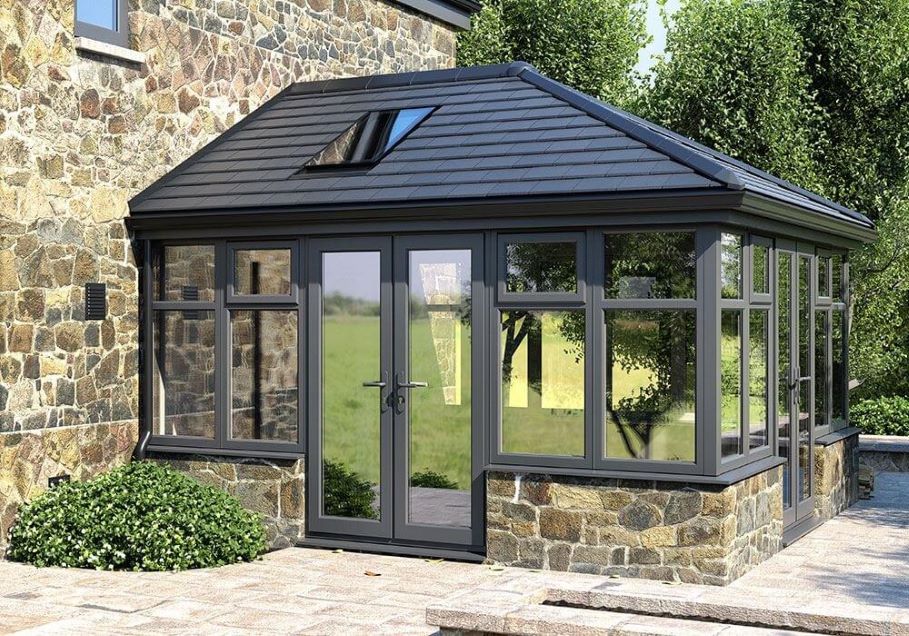
Which style of conservatory suits your home?
The right conservatory style depends on three things: the age and character of your property, your available space and how you plan to use the room. Traditional designs suit older properties, while simpler rectangular shapes sit comfortably on new builds.
| Style | Best for | Shape | Key strength |
| Victorian | Period homes and 1980s–1990s estates | Rounded bay front with angled sides | Classic design |
| Edwardian | Modern homes | Square or rectangular with a flat front | Maximum usable floor space |
| Gable end | Detached and semi-detached homes | Square with an upright triangular front | Vaulted ceiling |
| Lean-to | Bungalows, terraces and new builds | Rectangular with a single-pitched roof | Compact and cost-effective |
| P-shaped and T-shaped | Larger properties | Two styles combined in one | More than one zone |
| Orangery | A room that feels like an extension | Solid structure with pillars | Feels part of your home |
Victorian conservatories
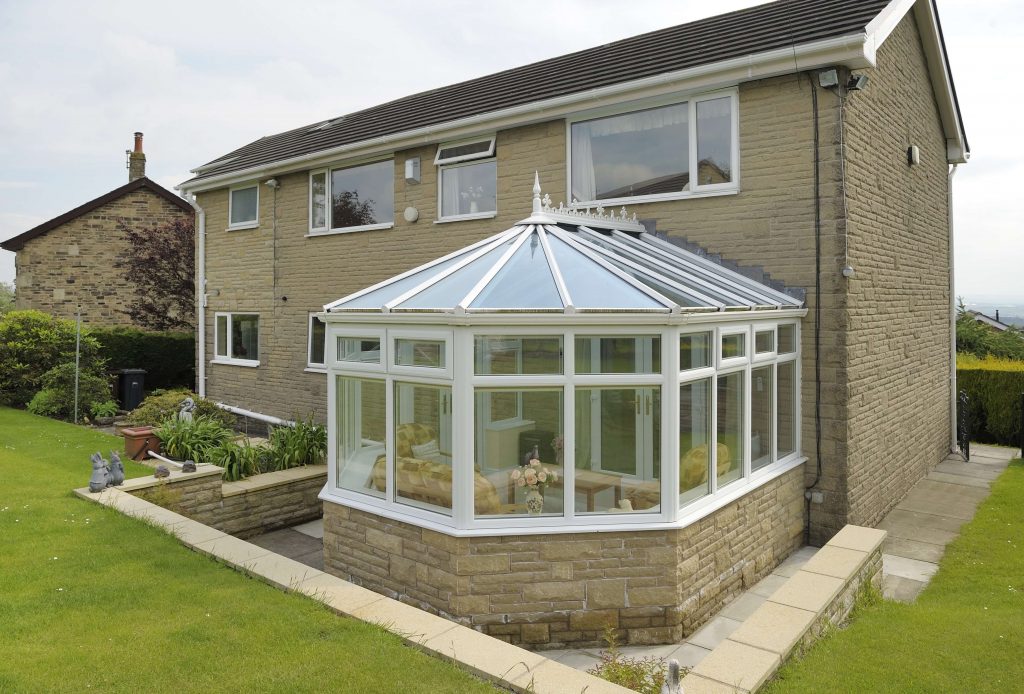
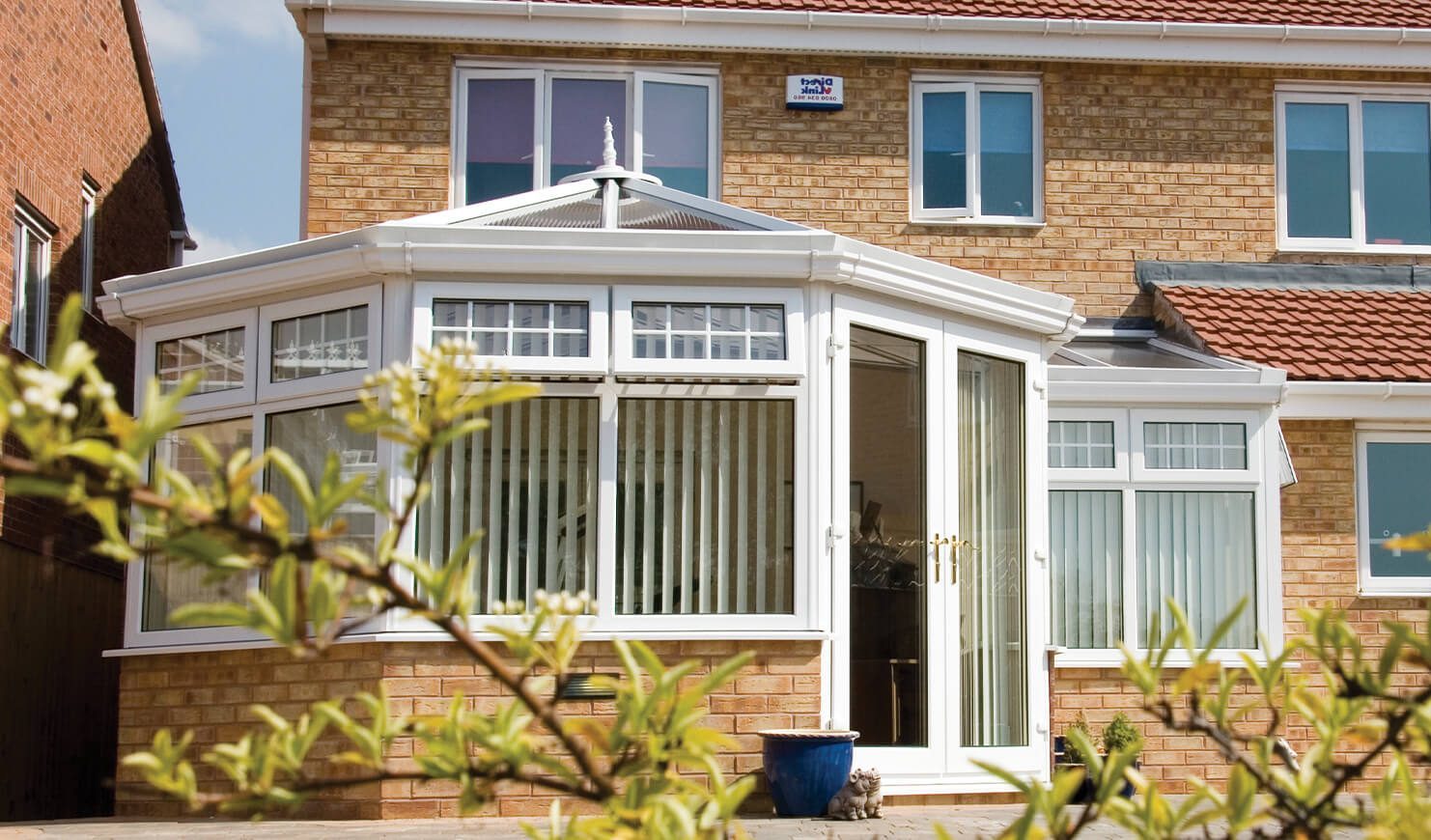
Victorian conservatories are the classic traditional conservatory and one of the most recognisable conservatory styles in the UK. Their key design features are a rounded front made up of three or five angled sides, a steeply pitched roof and decorative ridge detailing.
These angled sides catch the light from different directions, making this a striking addition to any home. The Victorian style suits period properties, but it looks just as good on a 1990s estate home as on a Victorian terrace.
Edwardian conservatories
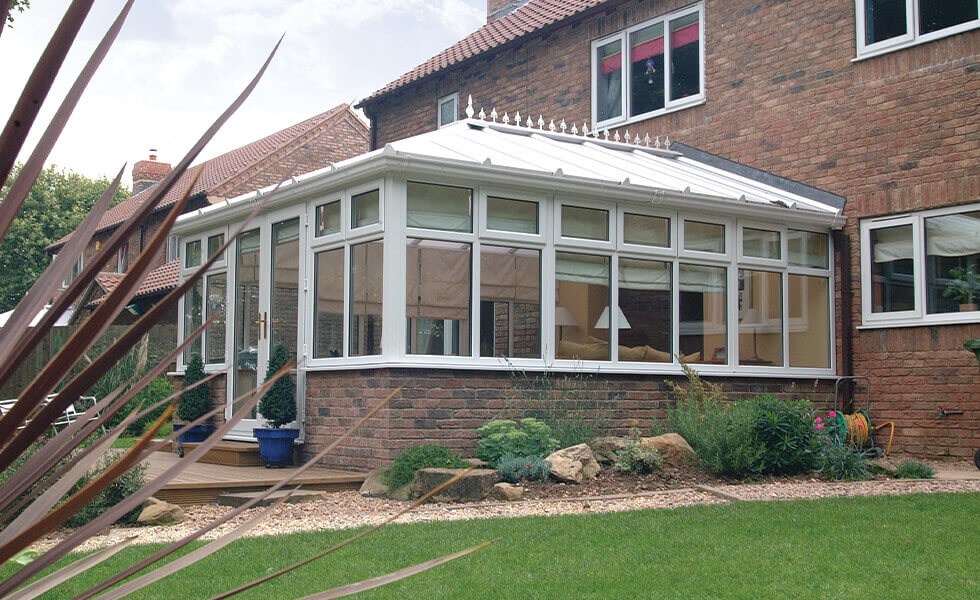
Edwardian conservatories swap the curves for clean lines, a flat front and a square or rectangular shape. With no angled sides, there are no awkward corners, so you can use all your available floor space.
That makes this style a practical choice for a dining room, and its minimalist design suits modern homes.
Gable end conservatories
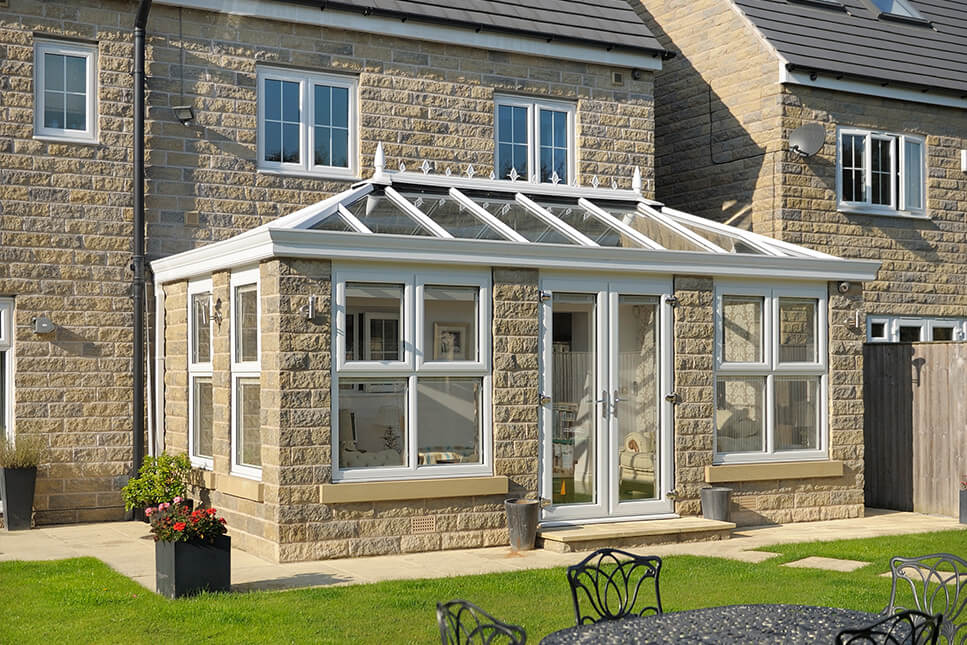
A gable conservatory has an upright front, with a triangular gable roof rising above full-height glass panels. Inside, the vaulted ceiling feels airy and the glazing fills the conservatory space with plenty of natural light.
Its symmetrical footprint echoes Georgian architecture, making it a good fit for a Georgian conservatory look. It works best on larger properties with space at the rear.
Lean-to conservatories
A lean-to conservatory has a single-pitched roof that slopes away from the house wall. It’s the simplest type of conservatory, so it uses fewer materials, is quicker to install and generally costs less.
Its compact profile makes it the ideal choice for bungalows, terraced homes and new builds, and for anyone working with limited space.

P-shaped and T-shaped conservatories
P-shaped and T-shaped conservatories combine two styles in one, which makes them a good fit for larger properties.
- P-shaped: a lean-to section joined to a Victorian or Edwardian section, creating two zones such as a lounge and a dining area
- T-shaped: a central projection extending out from a wider main section, ideal for homes with a long rear wall
Orangery-style designs
If you’d like extra living space that feels more like a traditional extension, take a look at our orangeries. They feature an insulated internal pelmet, grand pillars and integrated lighting and speakers, so the room feels like part of the rest of your home.
Different types of conservatory roofs
Your conservatory roof has a big say in how warm, bright and quiet the room feels. We offer three main options:
- Glass roof: lets in maximum light, with solar control glass as standard to help keep the room comfortable on sunny days
- Tiled roof: a solid roof that keeps the warmth in and outside noise out, so you can use the room all year round
- Lantern roof: a glass lantern set into the roof that brings daylight in from above, ideal for brightening up solid roof conservatories
Upgrading an old conservatory? Many older conservatories have a polycarbonate roof, which can feel too hot in summer and too cold in winter. Fitting a tiled roof to your existing conservatory is often a practical alternative to starting from scratch.
Frames, glazing and doors
Your window frames, glass and doors are what give your conservatory its finished look. We offer a wide range of uPVC and aluminium windows and doors so you can match your new conservatory to the style of your home.
- Doors: French, bifold and patio doors to open the room onto your garden
- Colours: classic white, anthracite grey, woodgrain effects and the full RAL range, with dual-colour options for a different shade inside and out
- Glazing: A-rated double glazing and solar control glass, with upgrades such as triple glazing available
Thinking about budget and value
Lean-to conservatories are usually the most cost-effective option, while larger styles and orangeries tend to cost more. It’s worth thinking about long-term value too. Nationwide found that a 10% increase in floor space adds around 5% to the price of a typical home.
Find your perfect conservatory with The Nottingham Window Company
Every conservatory is handled in-house, from our experienced designers to our certified installers. We offer free home visits, 3D visuals and itemised quotes, so you know exactly what you’re getting.
All our products are quality assured by CERTASS and come with QANW Insurance Backed Warranties and a lifetime guarantee as standard.
Have a question about which style suits your property, or ready to start planning your dream conservatory? Get a free, no-obligation quote, visit our showroom in Hucknall or call us on 0115 866 00 66.
Frequently asked questions
What is the most popular style of conservatory?
Victorian conservatories remain a classic choice. Edwardian conservatories are a popular alternative for homeowners who prefer a practical rectangular shape.
Which conservatory is best for a smaller home?
Generally, a lean-to. Its low roofline fits comfortably beneath bungalow eaves and first-floor windows, and its simple footprint makes good use of every square metre.
What’s the difference between a conservatory and an orangery?
A conservatory is mostly glazed, with large windows and often a glass roof. An orangery has a more solid structure with pillars and an insulated pelmet, so it feels closer to a traditional extension.
Do I need planning permission for a conservatory?
Often not. Most conservatories fall under permitted development, provided they meet size and height limits set out by the Planning Portal. Different rules apply to listed buildings and designated land, so it’s always worth checking with your local planning authority first.