
Planning an extension, orangery or other home improvement project? A roof lantern can transform a flat roof into a bright, welcoming part of your home, bringing natural light into areas that may otherwise feel dark.
Roof lanterns are available in different sizes, frame finishes and glazing options, so there is plenty to consider before choosing one. From thermal performance and solar control glass to planning permission and building regulations, understanding the key differences can help you find the perfect fit for your home.
What is a roof lantern?
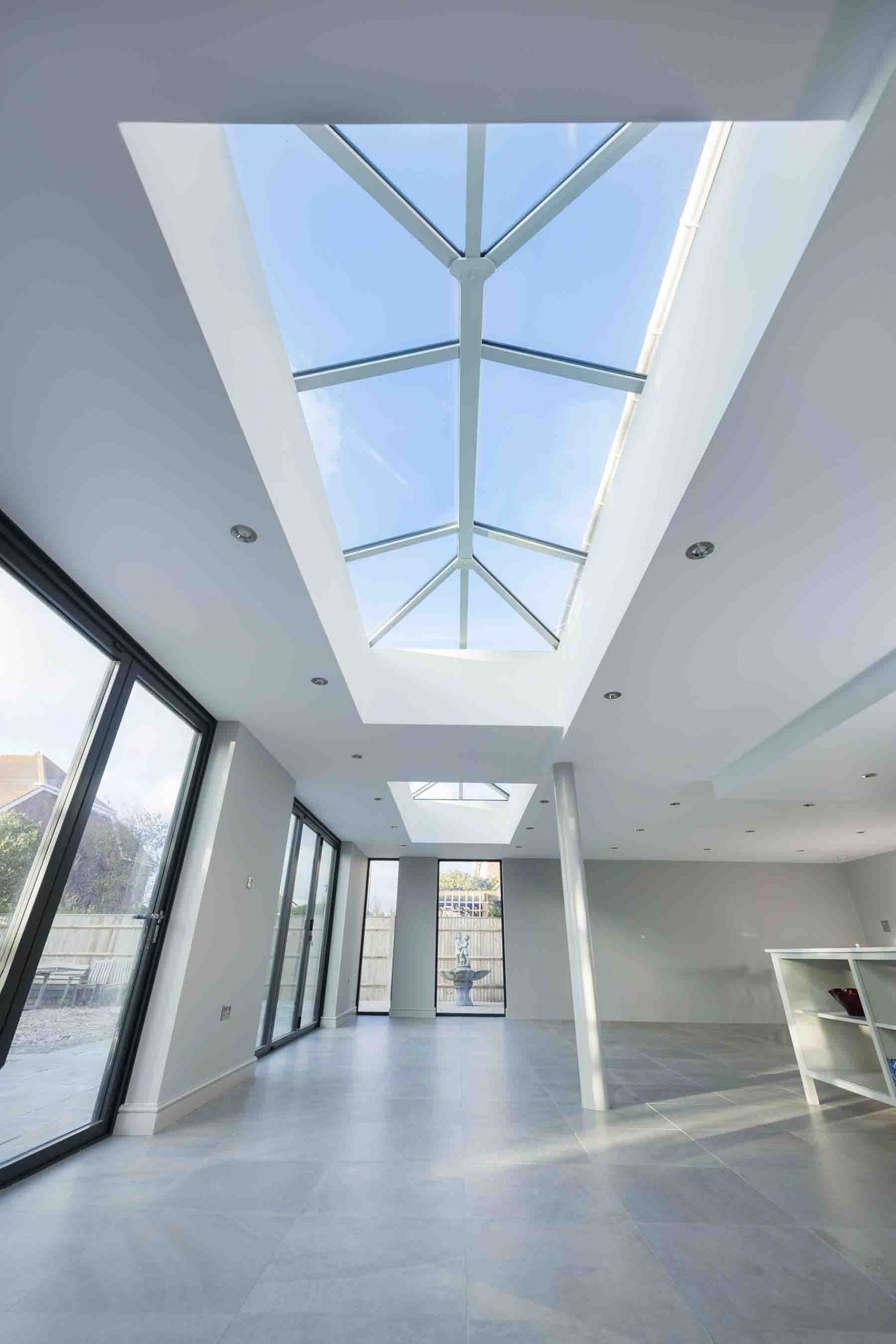
A roof lantern is a raised glazed structure fitted onto a flat roof. Angled glass panels create a distinctive architectural feature that allows more natural light into the room below while also giving you views of the sky.
Here at The Nottingham Window Company, our frameless glass roof lanterns are designed for conservatories, orangeries and extensions. Their contemporary design can work with both traditional and modern homes, depending on the surrounding architecture.
We offer standard and bespoke sizes, with our lanterns available up to 4000mm x 6000mm. This makes it possible to choose a roof lantern suited to the size and type of roof you are working with.
Where can you use roof lanterns?
Roof lanterns are particularly useful where a flat roof forms part of an extension or orangery. Popular areas of your home include:
- Kitchen extensions
- Open-plan dining rooms
- Orangeries
- Conservatories
- Single-storey extensions
An orangery can be a particularly good setting for a glass roof lantern, as the solid roof structure around it creates a defined area for the glazing. We also offer glazed, tiled and lantern roof options for our orangeries.
The size and position of the lantern will depend on your existing structure, the available roof space and the overall design of your project. Getting expert advice early can help you understand what is possible.
Roof lanterns vs flat rooflights
Flat rooflights and roof lanterns can both bring natural daylight into a flat-roofed space, but their designs create a different look and feel. A roof lantern sits above the roof with angled glazing, while a flat rooflight has a much lower profile.
| Feature | Roof lantern | Flat rooflight |
| Appearance | Raised glazing creates a distinctive architectural feature | Low-profile glazing creates a clean, understated finish |
| Roof height | Projects above the roof | Sits closer to the roofline |
| Design | Can suit traditional and contemporary extensions or orangeries | Particularly suited to minimalist and modern designs |
| Glazing | Angled panels allow light to enter from different directions | Provides a straightforward glazed opening within the roof |
| Best suited to | Extensions or orangeries where the roof glazing can become a feature | Projects where a discreet rooflight is preferred |
Our rooflight range includes different configurations to suit a variety of projects. If you’re unsure which option would work best, we can talk you through the choices based on your roof, room and overall design.
Why choose aluminium?
Our roof lanterns use aluminium profiles with thermally broken frames. A thermal break creates a barrier within the frame which helps reduce heat transfer between the inside and outside of your home.
Aluminium is also known for its strength and durability. Our rooflights are designed to withstand the demands of everyday use and exposure to the elements, while aluminium won’t rot like timber and offers strong resistance to corrosion.
The frames are available in white gloss, Grey 2017 matt and Black 9005 as standard, with additional RAL colours available for a more individual finish.
Choosing the right glazing
Glazing has a major influence on the comfort and energy efficiency of a roof lantern.
Our range includes double and triple glazed roof lanterns and rooflights, with Planitherm glazing available alongside toughened and heat-strengthened laminated glass.
Solar control glass is also fitted as standard. It helps control solar heat entering the room while allowing plenty of light transmission, which can be particularly useful where a roof lantern receives strong sunlight during the day.
The right glazing will depend on the size, orientation and intended use of the room. A member of our team can provide expert advice based on your specific needs.
Do roof lanterns need planning permission?
Whether you need planning permission depends on the circumstances of your project. If the roof lantern forms part of a new extension, the planning requirements will normally need to be considered as part of the wider extension.
Permitted development rights can apply to some home improvements, but restrictions can vary depending on the property and location. Conservation areas, listed buildings and properties where development rights have been removed may require additional checks.
Building regulations are separate from planning permission and apply to the construction and performance of the project. These can cover areas including structural safety, thermal performance and glazing.
For current requirements, it is always worth checking with your local planning authority or speaking to a member of our team for advice before work begins.
How do you choose the best roof lantern for your home?
Start by considering the size and type of roof, how much natural light you want and the direction the glazing will face. You should also think about thermal performance, solar control, frame colour and whether an opening rooflight would be useful. Expert advice can help you balance these requirements.
Frequently asked questions
Will a roof lantern make my room cold in winter?
Modern roof lanterns are designed with thermal performance in mind. Our systems use thermally broken aluminium frames alongside high-performance glazing, helping to retain warmth. The glazing specification and quality of installation will also influence the overall performance of the finished roof.
Are roof lanterns energy efficient?
A well-specified roof lantern can support good energy efficiency. Our roof lanterns are A-rated and use thermal break technology, while solar control glass helps manage solar heat. Bringing more natural daylight into your home can also reduce the need for artificial lighting during the day.
Which glazing is best for a roof lantern?
The best glazing will depend on the room, roof orientation and the level of thermal and solar control you need. Double glazing can provide good thermal performance, while triple glazing can offer additional insulation. Solar control glass can also help manage heat from direct sunlight while allowing natural light into the room.
Find your perfect roof lantern
At The Nottingham Window Company, we have over 20 years of experience helping homeowners across the East Midlands improve their homes with high-quality glazing and extensions.
Our roof lanterns are designed to combine natural daylight, thermal performance and durability with a choice of styles and finishes. Every Nottingham Window Company product also comes with our lifetime guarantee, giving you peace of mind.
You can see our roof lanterns at our showroom in Hucknall, where a member of our team can talk through the options available for your project. You can also book a free consultation, request a free quote or browse our previous work for inspiration.
Call us on 0115 866 00 66 to discuss your requirements.