
Replacing the windows in your home is one of the most rewarding upgrades you can make. Warmer rooms, lower energy bills, less street noise, and a sharper-looking exterior. But before you start choosing frames and glass units, there is a compliance layer that every homeowner needs to understand.
Building regulations for replacement windows are not optional. They are a legal requirement that covers thermal performance, ventilation, fire safety, and impact resistance. Get this right, and you have documented proof that protects your property sale. Get it wrong, and you can face delays, costs, and complications at the worst possible time.
This guide breaks it all down plainly, so you know exactly what to expect before a single measurement is taken.
Do replacement windows need building regulations approval?
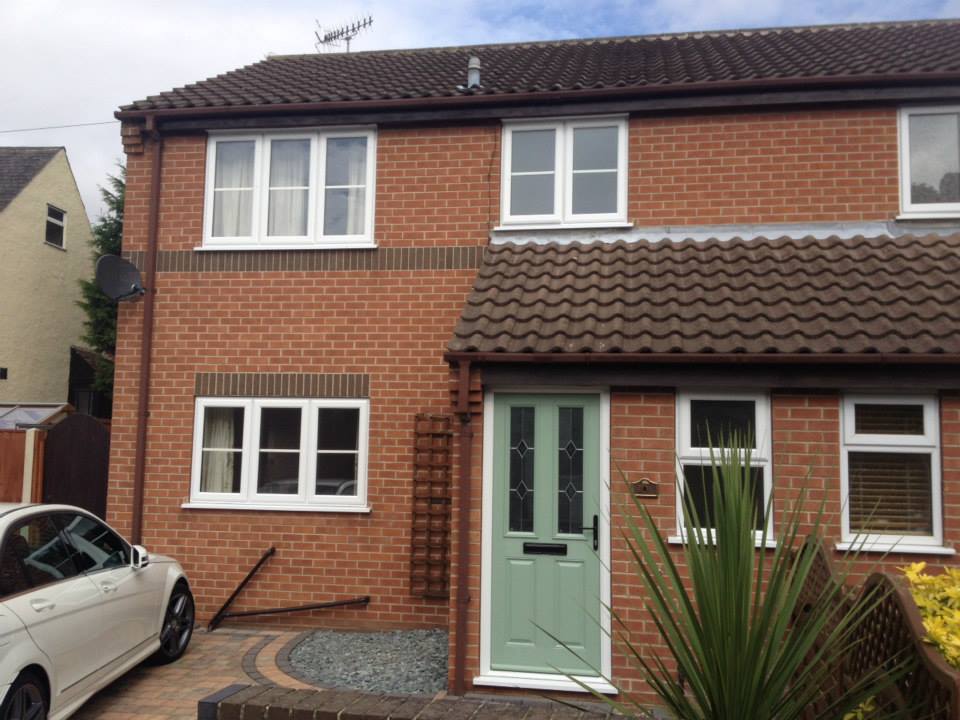
Yes. All replacement windows in domestic properties must comply with building regulations. There are no exceptions based on the age of your home, the style of the frames, or the material you are switching to.
Since April 2002, all replacement glazing has come within the scope of the building regulations, meaning anyone who installs replacement windows or doors has to comply with thermal performance standards.
There is one narrow exemption: just replacing the glass — rather than the whole frame and unit — is exempt.
If your sealed unit has failed and you are having the glass alone replaced, building regulations do not apply. But if the frame comes out, the regulations apply in full.
It is also worth being clear on the difference between planning permission and building regulations, because the two often get confused.
Many homeowners confuse planning permission with building regulations, but they are not the same. Planning permission governs how your home looks and how changes affect the local area. Building regulations govern how your windows perform, ensuring they meet strict standards for insulation, ventilation, fire safety, and impact protection.
In most cases, replacing like-for-like windows does not require planning permission at all. Building regulations, however, always apply.
Which approved documents cover window replacement?
Building regulations are structured around a series of approved documents, each covering a different aspect of performance. For replacement windows, the key ones are:
| Approved document | What it covers | Applies to replacements? |
| **Part L** | Thermal performance and energy efficiency | Yes |
| **Part F** | Ventilation and airflow | Yes (updated June 2022) |
| **Part B** | Fire safety and means of escape | Yes |
| **Part K** | Safety glazing and protection from impact | Yes |
| **Part Q** | Security against unauthorised access | New builds only |
| **Part O** | Overheating risk | New builds only |
The approved documents for building regulations in the UK provide detailed guidance on how to comply. The following documents are relevant for new or replacement windows: Part L of the building regulations sets out requirements for the energy efficiency of windows.
Each of these is covered in detail below.
Part L: thermal performance and U-values for replacement windows
Part L is the regulation most homeowners have heard of, and it is the one that catches people out most often. It governs how much heat your windows are allowed to lose.
The U-value is a measure of how much heat is lost through a material, and the Window Energy Rating (WER) is a measure of the overall energy efficiency of a window.
The current minimum standards for England are:
- Replacement windows in existing homes: maximum U-value of 1.4 W/m²·K and a WER of Band B or better
- Windows in new openings or new builds: maximum U-value of 1.2 W/m²·K and a WER of Band B or better
Replacement windows must have a U-value of no more than 1.4 W/m²·K and a WER of B or better. This distinction matters. Confusing the two is one of the most common compliance errors homeowners make.
The tighter standard for new openings exists because new construction has greater flexibility to integrate higher-performing components from the outset.
How did Part L change in June 2022?
From 15 June 2022, in line with the government’s target for the UK to be net carbon zero by 2050, the U-value requirement was reduced further for uPVC, aluminium, and timber windows and doors alike to 1.4 W/m²·K.
Before that date, the limit was 1.6 W/m²·K.
In the last 20 years, U-values have come down by over 30% in an effort to improve the energy efficiency of our homes.
Triple glazing is optional, not mandatory under current regulations. High-quality double glazing with low-emissivity (low-E) glass can comfortably meet the Part L requirement in most homes.
What is a Window Energy Rating?
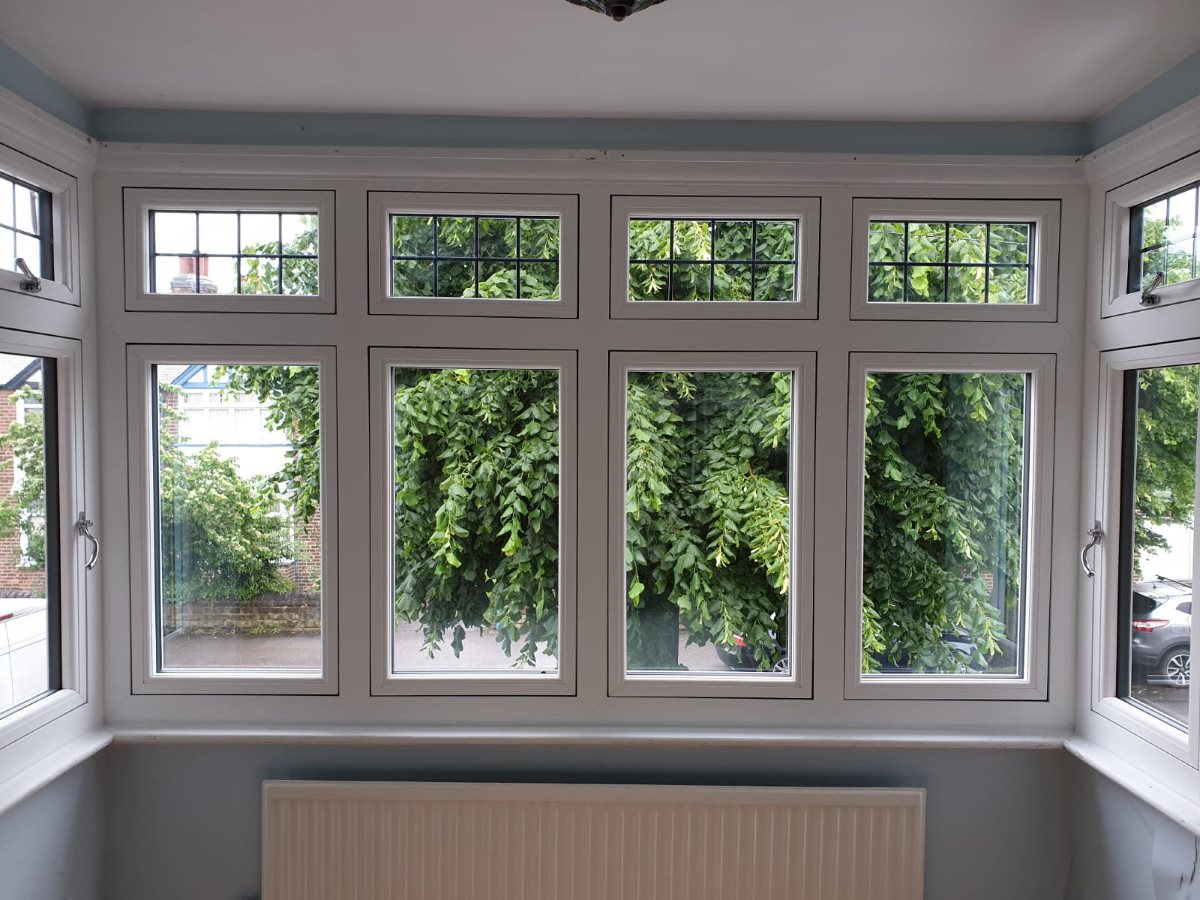
The Window Energy Rating scheme is run by the British Fenestration Rating Council (BFRC). It grades windows from Band A++ down to Band E, much like the energy labels on appliances. Band B is the current legal minimum for replacement windows. Most modern double glazed units from reputable suppliers reach Band A or above, meaning they go well beyond what the regulations demand.
At The Nottingham Window Company, all our replacement windows are A-rated as standard, giving you better thermal performance than the legal minimum requires.
Part F: ventilation rules and trickle vents
This is the regulation that has caused the most confusion since it was updated in June 2022. Many homeowners have been surprised to find that trickle vents are now a requirement for most replacement windows.
As of June 2022, if the original window already had background ventilation, such as trickle vents, any replacement window must provide at least the same amount of ventilation.
If the existing windows do not have vents, then the replacement windows must have vents fitted to meet the requirements of the revised Approved Document F. For houses in England, that means a minimum airflow of 8,000mm² EA in habitable rooms and 4,000mm² EA in non-habitable rooms.
Before the 2022 update, the old standard was 4,000mm² per habitable room. The doubling of this requirement reflects how much more airtight modern window systems are compared to the draughty frames they replace.
Ventilation is important to remove stale air and moisture from your home, which improves indoor air quality and reduces the risk of mould growth.
Do trickle vents ruin the look of new windows?
A common concern, and an understandable one. Modern trickle vents are colour-matched to the frame and sit discreetly at the top of the head section. In most installations, they are practically invisible from any distance.
Part F does not say trickle vents are the only method — it requires adequate ventilation levels. Trickle vents are a practical and commonly accepted means of compliance.
Alternative solutions, such as mechanical ventilation, can also satisfy Part F if designed and tested appropriately.
Part B: fire escape requirements for windows
Part B of the building regulations outlines the requirements for fire safety in buildings. New and replacement windows in habitable rooms must have suitably sized openings to provide emergency escape. The openable area in such a window must be at least 0.33m² and at least 450mm high or wide. The bottom of the openable area must also be no more than 1,100mm above the floor.
These dimensions apply to:
- All habitable rooms on ground floor that do not open directly into a hallway leading to an exit door
- All habitable rooms on upper floors up to 4.5 metres above ground level that do not have direct access to a protected stairway
This is a practical point that affects window style selection. Fixed lights — windows that do not open — cannot serve as escape windows. If you are replacing a bedroom window on an upper floor, the chosen style must include an openable section large enough to meet the escape criteria.
When replacing any window, the opening should be sized to provide at least the same potential for escape as the window it replaces. If the original window being replaced was larger than necessary for the purpose of escape, then the new window opening could be reduced down to the minimum as specified.
Styles such as tilt and turn windows are particularly well suited to upper floor rooms because the full sash can open inward, making egress straightforward while also making cleaning from the inside easy.
Part K: safety glazing and protection from impact
Part K requires that glazing in critical locations is safe. Safety glazing is required where glass is positioned at low level — specifically below 800mm from the floor in walls and below 1,500mm in doors and side panels.
In practical terms, this means:
- Any pane of glass where the lowest edge is less than 800mm from the floor must be toughened or laminated
- All glazing in doors and door side panels must be safety glass
- In buildings more than four metres above ground level, window restrictors must also be installed to limit the opening to no more than 100mm, reducing the risk of falls.
Safety glass either shatters into small, relatively harmless fragments (toughened/tempered glass) or holds together in a web pattern (laminated glass). Both are acceptable for compliance. Your installer should be specifying the correct type automatically based on the position of each unit.
Do I need building regulations for windows in a listed building or conservation area?
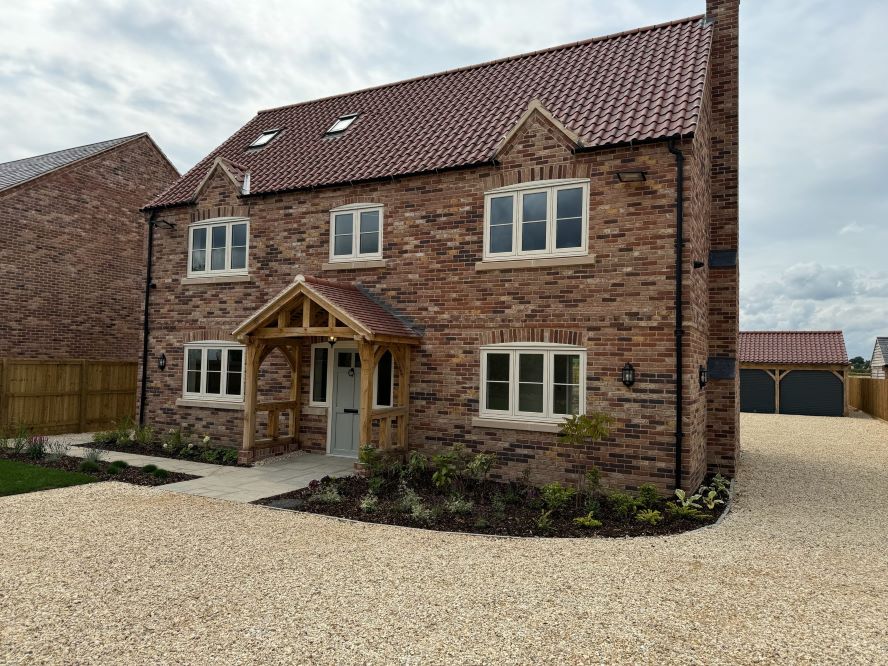
This is one of the most common questions we get from homeowners across Nottinghamshire, Derbyshire, and Leicestershire, where a large proportion of the housing stock is period property.
The short answer is: building regulations still apply, but the requirements around appearance create additional considerations.
There are no automatic exemptions to building regulations in conservation areas.
The energy performance standards, ventilation rules, and safety requirements all still apply. What differs is the planning permission layer that sits on top.
For listed buildings, the situation is more restricted still.
If your property is listed, you cannot alter any feature of architectural or historic interest — including windows — without obtaining listed building consent from your local planning authority.
It is important to note that listed buildings cannot be registered with FENSA. These must be notified directly with the local authority building control.
The one area where some flexibility exists is thermal performance.
Due to design restrictions, in exceptional circumstances it can be found that replacement windows and doors cannot meet the regulatory requirement set out in Approved Document L due to the need to protect the character of the building.
In such cases, the planning authority can grant an exemption, but only the planning authority can do this — it is not something an installer can decide.
For Part F (trickle vents), if you live in a listed building or in a building in a conservation area and are replacing your windows, they do not need to meet Part F, because of the requirement to preserve the character of listed buildings and buildings in conservation areas.
If you are unsure about your property’s status, the Historic England national register allows you to search by address. For conservation area boundaries, contact your local planning authority directly — in Nottinghamshire, that would typically be Nottingham City Council, Nottinghamshire County Council, or the relevant district authority depending on your location.
Planning permission vs building regulations: what is the difference?
It is worth restating this clearly, because it genuinely confuses people:
Planning permission controls what your windows look like from the outside and how changes affect the streetscape. For most like-for-like replacements in standard residential properties, planning permission is not required at all.
Building regulations control how your windows perform: their thermal efficiency, their ventilation, their fire safety, and their structural integrity. These apply to virtually every replacement window installation regardless of whether planning permission is needed.
If you are adding new openings, altering sizes, or making structural changes, the work must be approved through Building Control instead of being self-certified by a registered installer.
How The Nottingham Window Company handles compliance
Every installation we carry out is fully compliant with current building regulations as standard. We do not treat compliance as a box-ticking exercise — it is built into the survey, the product specification, and the installation process.
Professional, accredited, and established as Nottingham, Leicester and Derby’s most reliable double glazing specialists, honest family values combined with the very best windows, doors, glazed extensions and roofline products is what sets The Nottingham Window Company apart. All our installation experts are certified for quality and competence.
For complete peace of mind, The Nottingham Window Company is quality assured by CERTASS and provides QANW Insurance Backed Warranties as standard.
If you are ready to take the next step, request a free consultation with The Nottingham Window Company. We cover Nottinghamshire, Derbyshire, Leicestershire, Lincolnshire, and Northamptonshire, and we will handle every aspect of compliance from survey through to certification.
You can also call us on 0115 866 0066 or email sales@thenottinghamwindowcompany.co.uk.